
Korean · Noodles
Jjamppong (Spicy Seafood Noodle Soup) 짬뽕
Say it: jjam-ppong
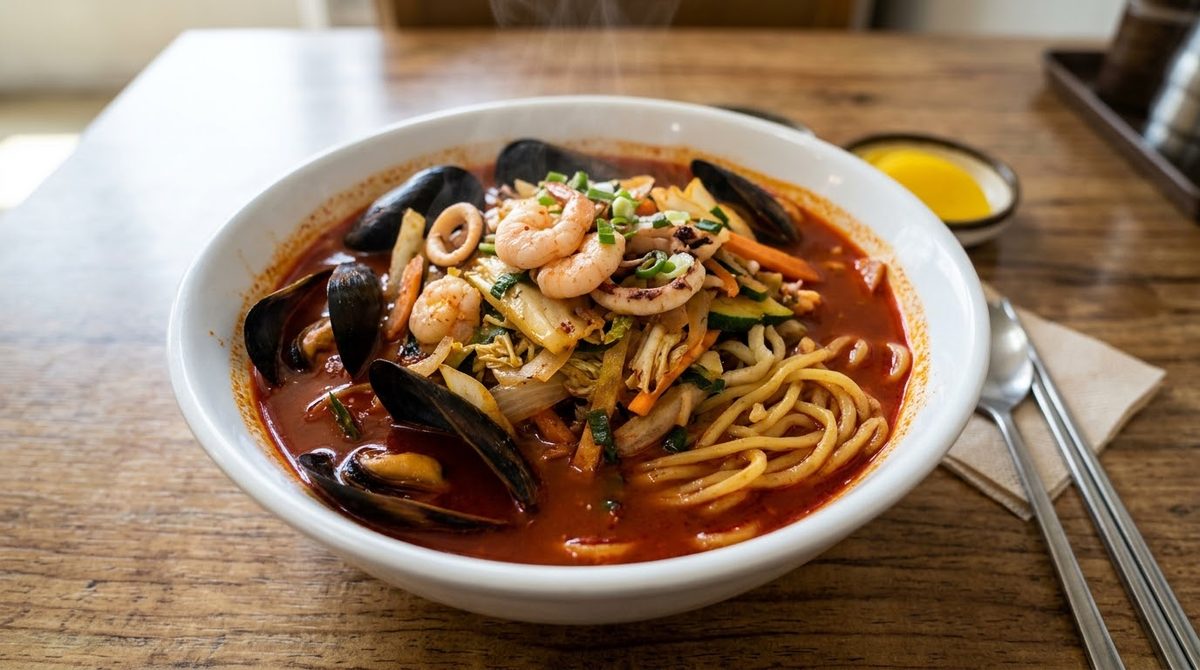
The red half of every Korean-Chinese restaurant menu: chili oil made in the pot, pork and vegetables stir-fried over high heat for a smoky taste, then a spicy broth with mussels, shrimp and squid poured over chewy noodles.
- Prep
- 20 min
- Cook
- 25 min
- Level
- Medium
- Heat
- Medium
Contains: shellfish, fish, soy, wheat
Allergen info is a guide only; check product labels. Cook meat, poultry, seafood and eggs until done. Allergies and food safety
Ingredients
Serves 4
Chili oil
- 3 tbspVegetable oil
- 1 tbspGarlic, minced
- 1 tspFresh ginger, minced
- 2Green onions, chopped
- 2-3 tbspGochugaru (Korean chili flakes)What's this?
Stir-fry
- 4 ozPork shoulder, in thin strips
- 1Onion, sliced
- 2 cupsGreen cabbage, sliced
- 1/2Carrot, thinly sliced
- 1/2Zucchini, sliced into half-moons
Soup
- 6 cupsUnsalted chicken stock
- 2 tbspSoy sauceWhat's this?
- 1 tbspOyster sauceWhat's this?
- 1 tspFish sauceWhat's this?
- 1 lbMussels, scrubbed
- 8 ozShrimp, peeled
- 6 ozSquid, cut into rings
Noodles
- 1 1/2 lbFresh Korean Chinese-style wheat noodles or udonWhat's this?
Steps
Tap a step to mark it done. Cook mode shows one big step at a time, with timers, and keeps your screen on.
Mandu's tips
- A bag of frozen mixed seafood works well; thaw it first. Use 2 tbsp gochugaru for medium heat, 3 for restaurant heat.
- Look for fresh jjamppong or jjajang noodles in the fridge or freezer at Korean markets; udon or thick fresh ramen noodles are good swaps.
- Contains shellfish and fish. Squid and mussels are mollusks, so check with guests who have shellfish allergies.